
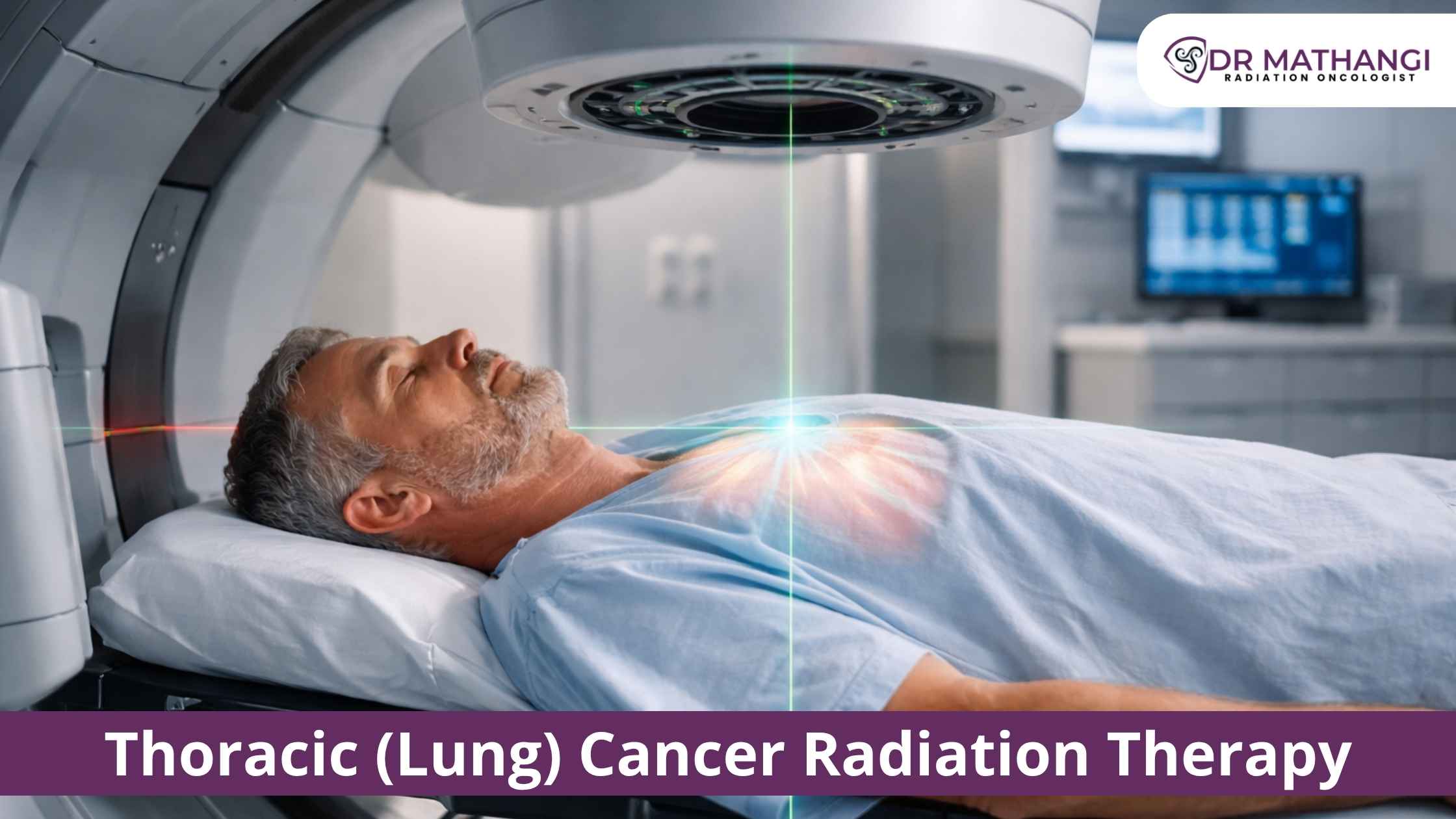
Lung cancer remains one of the most common cancers worldwide, accounting for nearly 2.2 million new cases annually. This staggering statistic highlights why advanced treatment approaches such as lung cancer radiation therapy are crucial for improving survival and quality of life. When performed by an experienced radiation oncologist, modern radiation therapy can precisely target cancer cells while preserving surrounding organs.
At the forefront of this life-saving discipline is Dr Mathangi J, Senior Consultant and In-charge of Radiation Oncology at Gleneagles Cancer Institute, Bangalore. With more than 20 years of experience and over 12,000 successfully treated patients, she has dedicated her career to delivering advanced, technology-driven radiation oncology treatments that improve patient outcomes. For individuals diagnosed with thoracic malignancies, especially lung cancers, receiving expert care at the right time can make a life-changing difference.
Radiation therapy for lung cancer has evolved dramatically over the past two decades. Earlier radiation techniques were limited in precision, sometimes affecting nearby organs such as the heart, esophagus, and spinal cord. Today, breakthroughs such as precision radiation therapy, adaptive radiotherapy, and stereotactic treatments allow oncologists like Dr Mathangi to deliver highly targeted radiation doses with exceptional accuracy.
What is lung cancer radiation therapy and how does it work?
Lung cancer radiation therapy is a treatment that uses high-energy radiation beams to destroy cancer cells in the lungs and surrounding thoracic region. The radiation damages the DNA of cancer cells, preventing them from multiplying and eventually causing them to die.
This treatment may be used in different clinical situations:
- As a primary treatment for early-stage lung cancers
- In combination with chemotherapy for advanced disease
- After surgery to eliminate microscopic residual disease
- For symptom relief in advanced stages
Because lung tumors are located near vital organs, the success of treatment depends heavily on the expertise of the radiation oncologist and the technology used. This is where Dr Mathangi’s extensive experience and specialized training in global radiation oncology centers becomes invaluable.
Why advanced radiation techniques matter in lung cancer treatment
Traditional radiation therapy could sometimes affect healthy tissues around the tumor. Modern oncology now prioritizes healthy tissue sparing radiotherapy, ensuring that radiation reaches the tumor while minimizing exposure to nearby organs.
Dr Mathangi uses cutting-edge techniques that deliver highly focused radiation beams while carefully protecting structures such as:
- The heart
- The esophagus
- The spinal cord
- Healthy lung tissue
This ability to safeguard surrounding tissues not only reduces side effects but also allows patients to receive effective radiation doses safely.
How precision radiation therapy improves lung cancer outcomes
Precision radiation therapy refers to advanced treatment planning and delivery systems that allow radiation to be administered with millimeter-level accuracy. This approach ensures that the tumor receives the necessary therapeutic dose while minimizing damage to healthy tissues.
At Dr Mathangi’s center, treatment planning typically involves:
- Advanced imaging techniques
- Detailed tumor mapping
- Computer-guided radiation planning
- Continuous monitoring during treatment
Such precision is especially critical in thoracic cancers because the lungs move continuously during breathing. By accounting for these movements, treatment can remain accurate throughout the therapy sessions.
IGRT cancer treatment for lung tumors
IGRT cancer treatment, or Image Guided Radiation Therapy, uses imaging scans during each treatment session to verify the exact position of the tumor before delivering radiation. This ensures the radiation beam aligns perfectly with the tumor location.
For lung cancer patients, this technology is particularly important because tumor positions can change due to breathing movements. IGRT allows oncologists to adjust the treatment in real time.
Benefits of IGRT cancer treatment include:
- Greater targeting accuracy
- Reduced radiation exposure to nearby organs
- Improved tumor control rates
- Enhanced treatment safety
Dr Mathangi has extensive expertise in advanced image-guided systems, making this technique a key component of her thoracic cancer treatment protocols.
SBRT cancer treatment for early-stage lung cancer
One of the most revolutionary developments in radiation oncology is SBRT cancer treatment (Stereotactic Body Radiotherapy). This highly specialized therapy delivers extremely precise, high-dose radiation to tumors in fewer sessions.
SBRT is particularly effective for patients with early-stage lung cancer who may not be candidates for surgery.
Advantages of SBRT cancer treatment include:
- Shorter treatment duration
- High precision targeting
- Excellent tumor control
- Minimal impact on healthy tissue
Dr Mathangi received specialized training in stereotactic techniques from Germany and is widely recognized for her expertise in SBRT-based therapies. Her experience allows patients to access global-standard treatment protocols within India.
Adaptive radiotherapy for changing tumor conditions
Cancer tumors can shrink or shift during the course of treatment. Adaptive radiotherapy addresses this challenge by modifying treatment plans based on changes in tumor size, shape, or location.
This dynamic approach ensures that radiation therapy remains optimized throughout the treatment cycle. Instead of following a fixed plan, the treatment evolves according to the patient’s response.
Adaptive radiotherapy enables:
- Continuous treatment optimization
- Improved radiation accuracy
- Reduced unnecessary exposure to healthy tissues
- Better long-term outcomes
When integrated with IGRT and SBRT technologies, adaptive radiotherapy significantly enhances the effectiveness of thoracic cancer treatments.
Healthy tissue sparing radiotherapy and patient safety
One of the most important goals of modern oncology is protecting normal tissues during cancer treatment. Healthy tissue sparing radiotherapy ensures that organs near the tumor receive minimal radiation exposure.
In lung cancer therapy, this is especially critical because nearby organs include:
- The heart
- The esophagus
- The spinal cord
- Major blood vessels
Dr Mathangi’s use of gated radiotherapy techniques, advanced imaging guidance, and precise beam delivery systems enables treatment that prioritizes patient safety without compromising cancer control.
Conditions treated with radiation therapy
Radiation oncology plays an essential role in the treatment of many cancers. According to Dr Mathangi, radiation therapy is commonly used in treating the following cancers:
- Head and neck cancers
- Brain tumors
- Spine tumors
- Esophagus and rectal cancers
- Lung cancers
- Liver cancers
- Breast cancers
- Bladder cancers
- Prostate cancers
- Uterine cancers
- Cervical cancer
- Vulval cancers
- Anal canal cancers
- Penile cancers
Her extensive experience across multiple cancer types allows her to bring a multidisciplinary perspective to thoracic cancer care.
Why patients trust Dr Mathangi for thoracic cancer radiation therapy
Choosing the right oncologist is one of the most important decisions a cancer patient can make. Dr Mathangi has earned a reputation for excellence in radiation oncology due to her combination of clinical expertise, international training, and compassionate patient care.
Key highlights of her career include:
- Over 20 years of experience in radiation oncology
- More than 12,000 successfully treated patients
- Advanced training in Germany and Denmark
- Expertise in stereotactic radiotherapy techniques
- Leadership role as In-charge of Radiation Oncology at Gleneagles Cancer Institute
- Installation of Asia Pacific’s first TrueBeam STx machine
Her approach combines cutting-edge technology with personalized care, ensuring that every patient receives treatment tailored to their specific diagnosis.
How to book an appointment with Dr Mathangi
Early consultation with an experienced radiation oncologist can significantly influence treatment outcomes in lung cancer. Patients who suspect symptoms or have been diagnosed with lung tumors should seek expert evaluation as soon as possible.
To schedule a consultation with Dr Mathangi:
- Visit the contact page on her website.
- Submit your contact information through the appointment form.
- Her team will review the request and confirm the consultation schedule.
The appointment request form is available at:
https://drmathangi.com/contact/
Prompt access to specialized care can make a significant difference in treatment outcomes, and patients who act early often benefit from a wider range of treatment options.
About Dr Mathangi
Dr Mathangi J is a Senior Consultant and In-charge of Radiation Oncology at Gleneagles Cancer Institute in Bangalore. She holds an MBBS, DMRT, and DNB and has more than two decades of clinical experience in treating complex cancers using advanced radiation techniques.
Her areas of specialization include head and neck cancers, prostate cancers, brain tumors, lung cancers, and women’s cancers such as breast and cervical cancer. Through a combination of advanced technology, research-driven protocols, and compassionate patient care, she continues to help patients achieve better outcomes in cancer treatment.