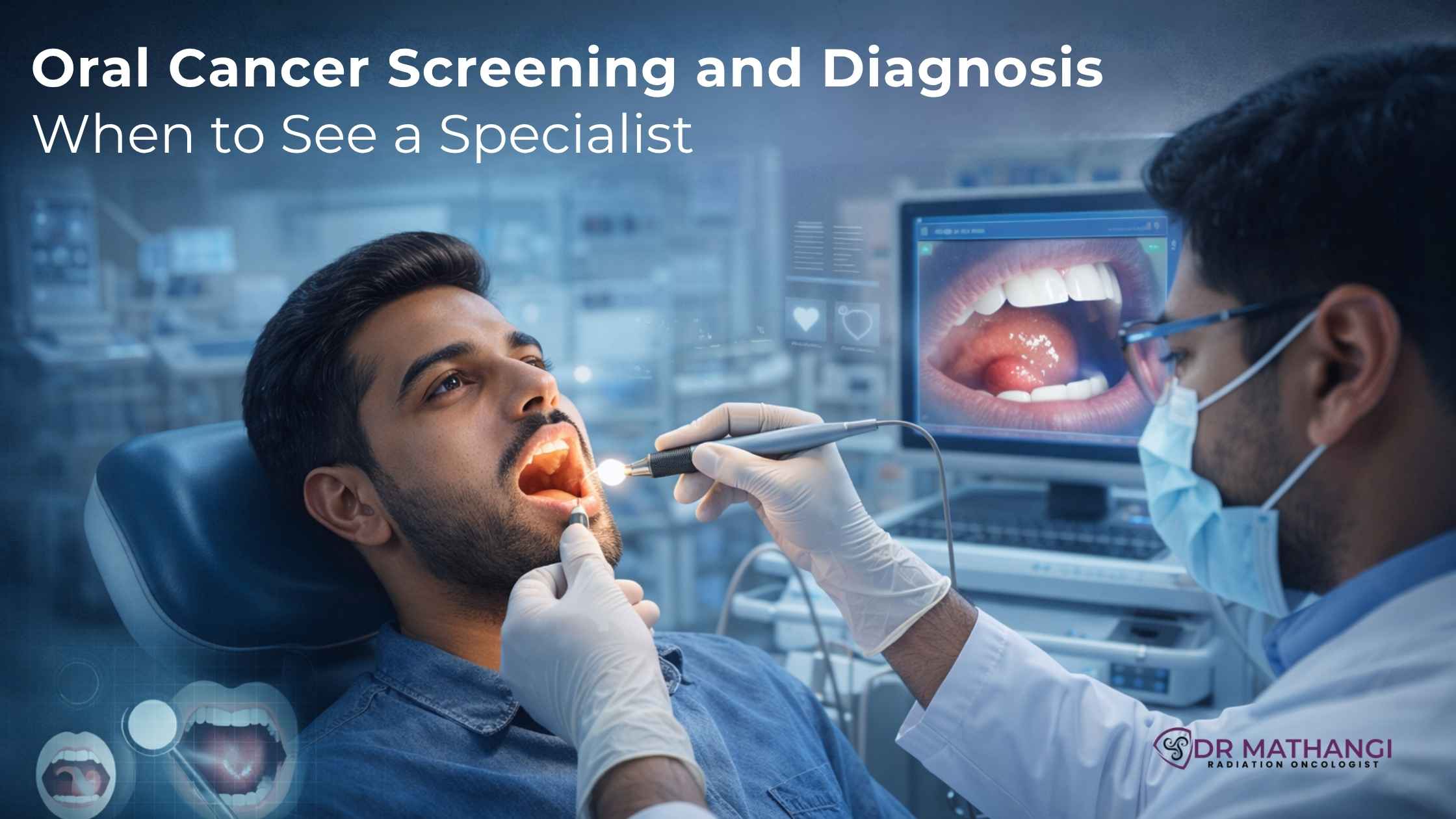
Oral cancer screening plays a critical role in saving lives, especially when you consider that early detection can improve survival rates by up to 80–90%. Despite this, many individuals delay evaluation until symptoms become severe. This delay can drastically impact treatment outcomes, making timely intervention by an expert like Dr Mathangi not just important—but essential.
Oral cancer screening is a preventive examination aimed at identifying abnormal tissue changes in the mouth before they become life-threatening. It is typically painless, quick, and highly effective when performed regularly.
The importance of oral cancer screening lies in its ability to:
Ignoring early signs can lead to advanced-stage cancer, where treatment becomes more complex and outcomes less predictable. This is where expert intervention becomes crucial.
An oral cancer screening test is recommended for anyone, but certain individuals are at higher risk and should prioritize regular screenings.
Even if you feel completely healthy, a routine oral cancer screening test can uncover hidden risks that might otherwise go unnoticed.
A dentist oral cancer exam is often the first step in identifying potential concerns. During this exam, the clinician carefully inspects the mouth, tongue, throat, and surrounding tissues.
The process typically includes:
While a dentist oral cancer exam is effective for initial detection, suspicious findings often require referral to a specialist like Dr Mathangi for further evaluation and advanced care.
Oral lesion evaluation becomes necessary when abnormalities such as ulcers, patches, or growths persist for more than two weeks. Not all lesions are cancerous, but ignoring them can be dangerous.
Signs that require immediate oral lesion evaluation include:
Dr Mathangi emphasizes that timely oral lesion evaluation can make the difference between a simple treatment and a life-threatening condition.
Mouth cancer diagnostic procedures are designed to confirm the presence of cancer and determine its stage. These procedures are critical in planning effective treatment.
Common mouth cancer diagnostic procedures include:
Each of these mouth cancer diagnostic procedures provides valuable insights that guide personalized treatment strategies under the expertise of Dr Mathangi.
A biopsy for oral cancer diagnosis is the definitive method to confirm whether a suspicious lesion is cancerous. It involves removing a small tissue sample for laboratory analysis.
The importance of biopsy for oral cancer diagnosis includes:
Dr Mathangi ensures that every biopsy for oral cancer diagnosis is conducted with precision and care, minimizing discomfort while maximizing diagnostic accuracy.
Early cancer detection methods focus on identifying cancer at its earliest and most treatable stage. These methods are the foundation of successful outcomes in oncology.
Key early cancer detection methods include:
Dr Mathangi integrates cutting-edge early cancer detection methods into her practice, ensuring patients receive timely and accurate diagnoses.
You should consult a specialist if you notice any persistent oral symptoms lasting more than two weeks, or if your dentist recommends further evaluation. Early specialist intervention can significantly improve outcomes.
Warning signs include:
Delaying consultation can lead to advanced disease stages. Seeking care from an experienced oncologist like Dr Mathangi ensures access to advanced diagnostic tools and personalized treatment.
Dr Mathangi is a Senior Radiation Oncologist with over 20 years of experience and more than 12,000 successfully treated patients. She leads the Radiation Oncology department at Gleneagles Cancer Institute, Bangalore.
Her expertise includes:
She specializes in treating:
Her patient-centric approach ensures that every individual receives tailored care, combining advanced technology with compassionate treatment.
Once oral cancer is diagnosed, treatment planning begins immediately. Depending on the stage and type, treatment may involve radiation therapy, surgery, or a combination of approaches.
Dr Mathangi’s expertise in radiation oncology ensures:
The biggest mistake many people make is ignoring early symptoms. Oral cancer often starts silently, and by the time pain appears, the disease may already be advanced.
By opting for timely oral cancer screening and expert diagnosis, you:
Choosing Dr Mathangi means choosing expertise, precision, and a commitment to your long-term health.
If you are experiencing symptoms or want to undergo preventive oral cancer screening, do not wait. Early action can make all the difference.
To book an appointment, submit your details at: https://drmathangi.com/contact/
Her team will promptly schedule your consultation and guide you through the next steps.
Dr Mathangi J is a Senior Consultant and In-charge of Radiation Oncology at Gleneagles Cancer Institute, Bangalore. With over two decades of experience, she is recognized for her expertise in advanced radiotherapy techniques and her commitment to delivering world-class cancer care.
Her achievements include installing Asia Pacific’s first TrueBeam STx Machine and leading innovative cancer treatment programs. She continues to shape the future of oncology through clinical excellence and patient-focused care.