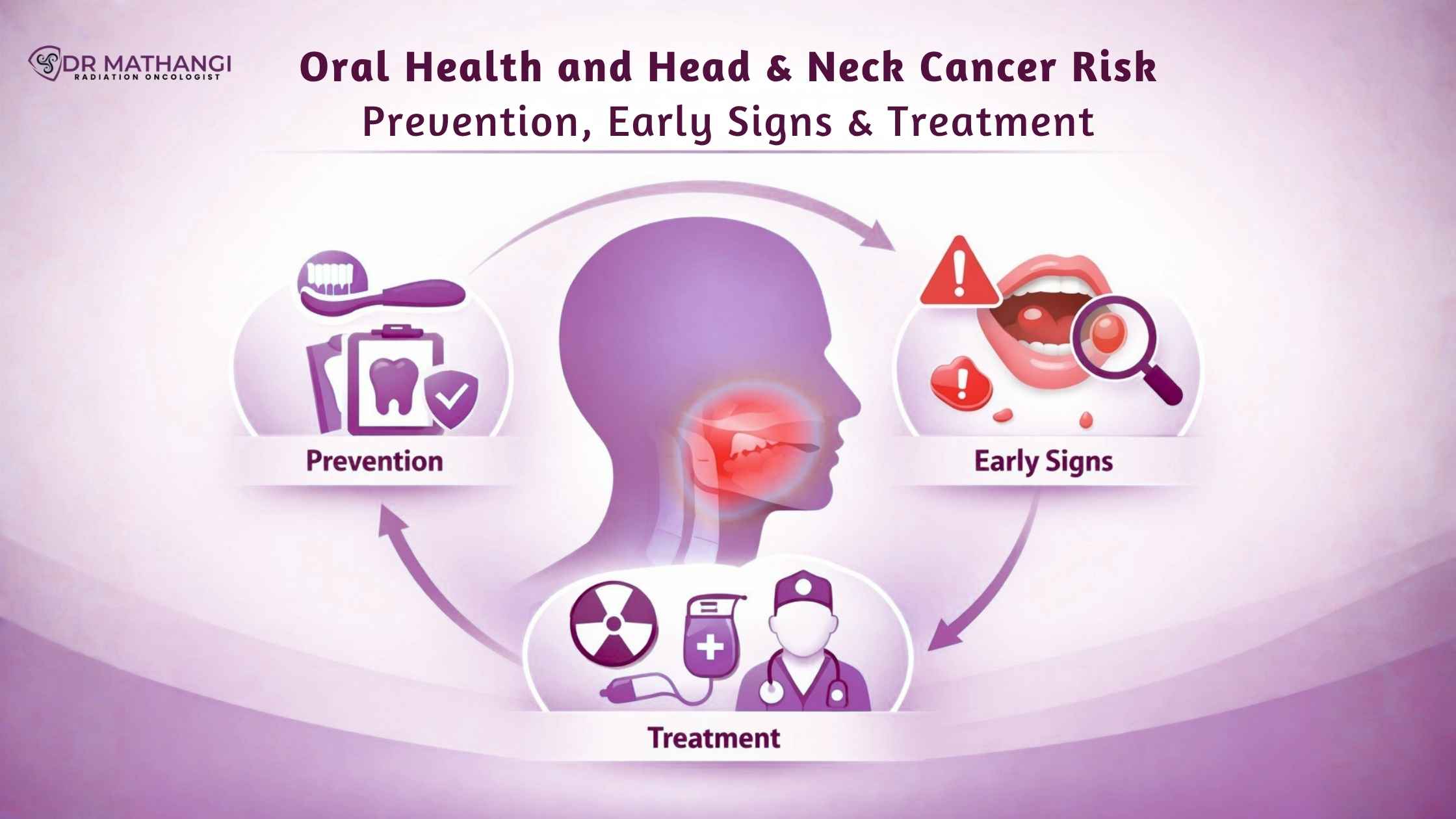
Oral Health And Head & Neck Cancer Risk:

Oral Health

Head and neck cancers account for over 650,000 cases globally each year, with a significant percentage directly linked to poor oral health and lifestyle factors. The relationship between oral health and head and neck cancer is stronger than most people realize—making early awareness, prevention, and expert intervention absolutely critical.

If overlooked, minor oral issues can silently progress into life-threatening conditions. This is where the expertise of Dr Mathangi J, Senior Consultant & In-charge - Radiation Oncology at Gleneagles Cancer Institute, becomes invaluable. With over 20 years of experience and more than 12,000 successfully treated patients, she offers advanced, evidence-based cancer care that can dramatically improve outcomes when accessed at the right time.

What is the link between oral health and head and neck cancer?

The connection between oral health and head and neck cancer lies in chronic inflammation, infections, and exposure to carcinogens in the oral cavity. Poor oral hygiene creates an environment where harmful bacteria thrive, increasing the likelihood of cellular mutations that may lead to cancer.

This risk is further amplified when combined with lifestyle habits such as tobacco use, alcohol consumption, and untreated dental conditions. Over time, these factors contribute to the development of malignancies in areas like the tongue, throat, gums, and voice box.

Why is oral hygiene important for cancer prevention?

Maintaining strong oral hygiene is one of the most effective and often underestimated methods of oral hygiene and cancer prevention. Healthy gums and teeth reduce inflammation and bacterial load, lowering the risk of abnormal cell growth.

The oral hygiene importance for cancer prevention includes:

  • Reducing chronic infections and inflammation
  • Preventing precancerous lesions
  • Improving immune response in oral tissues
  • Enabling early detection of abnormalities

Neglecting oral care, on the other hand, creates a silent pathway toward serious disease—often without noticeable symptoms in early stages.

What are the major oral cancer risk factors?

Understanding oral cancer risk factors is essential to reduce exposure and take preventive action. While some risks are lifestyle-related, others may be linked to genetics or infections.

Key risk factors include:

  • Tobacco use (smoking and smokeless forms)
  • Excessive alcohol consumption
  • Human papillomavirus (HPV) infection
  • Poor oral hygiene and dental neglect
  • Chronic irritation from ill-fitting dentures
  • Nutritional deficiencies
  • Family history of cancer

When multiple oral cancer risk factors are present, the probability of developing cancer increases significantly—making regular monitoring essential.

What are the early signs and symptoms to watch for?

Recognizing head and neck cancer symptoms early can make a life-saving difference. Unfortunately, many people ignore early warning signs, assuming they are minor dental issues.

Common symptoms include:

  • Persistent mouth sores that do not heal
  • Red or white patches inside the mouth
  • Difficulty swallowing or speaking
  • Unexplained bleeding in the mouth
  • Chronic sore throat or hoarseness
  • Swelling or lumps in the neck
  • Numbness or pain in oral regions

These head and neck cancer symptoms should never be ignored. Early evaluation by a specialist like Dr Mathangi ensures timely diagnosis and intervention.

Why is mouth cancer early detection critical?

Mouth cancer early detection significantly improves survival rates and reduces the complexity of treatment. When detected at an early stage, cancer can often be treated with less aggressive therapies and better functional outcomes.

Benefits of early detection include:

  • Higher treatment success rates
  • Reduced need for extensive surgery
  • Better preservation of speech and swallowing functions
  • Lower emotional and financial burden

Delaying diagnosis, however, often leads to advanced-stage cancer that requires complex, multi-modality treatment.

What is the importance of regular screening?

The oral cancer screening importance cannot be overstated. Regular screenings help detect abnormalities even before symptoms appear, making them a cornerstone of preventive oncology.

Screening typically involves:

  • Visual examination of oral tissues
  • Palpation of neck and lymph nodes
  • Assessment of suspicious lesions
  • Advanced imaging if required

With increasing awareness of oral cancer screening importance, more individuals are opting for preventive check-ups—leading to earlier diagnoses and better outcomes.

How does Dr Mathangi approach treatment for head and neck cancers?

Dr Mathangi is a leading radiation oncologist specializing in advanced cancer care, particularly in head and neck malignancies. Her approach combines precision technology with personalized treatment planning.

Her expertise includes:

  • Stereotactic ablative body radiotherapy (SBRT)
  • Image-guided radiotherapy (IGRT)
  • RapidArc and gated radiotherapy techniques
  • Interstitial brachytherapy

She has also been instrumental in introducing cutting-edge technologies like the TrueBeam STx system in the Asia Pacific region—ensuring patients receive world-class treatment.

Cancers that often require radiation therapy include:

  • Head and neck cancers
  • Brain tumors
  • Spine tumors
  • Lung cancers
  • Liver cancers
  • Breast cancers
  • Bladder cancers
  • Prostate cancers
  • Uterine and cervical cancers
  • Anal canal and penile cancers

How can you reduce your risk starting today?

Preventing cancer is not about drastic changes—it’s about consistent, informed choices. Integrating oral hygiene and cancer prevention practices into your daily routine can significantly reduce your risk.

Actionable steps include:

  1. Brush twice daily and floss regularly
  2. Avoid tobacco and limit alcohol consumption
  3. Maintain regular dental check-ups
  4. Eat a balanced, nutrient-rich diet
  5. Monitor any unusual oral changes
  6. Schedule periodic cancer screenings

Ignoring these steps may seem harmless today—but over time, the consequences can be severe and irreversible.

Why choosing the right specialist makes all the difference

When it comes to cancer, expertise is not optional—it is essential. Dr Mathangi’s extensive training across global institutions and her leadership at Gleneagles Cancer Institute position her among the most trusted names in radiation oncology.

Her patient-centric approach ensures:

  • Accurate diagnosis using advanced technology
  • Customized treatment plans
  • Minimized side effects through precision therapy
  • Holistic care focused on long-term recovery

Delaying expert consultation can lead to missed opportunities for early intervention. Acting now could mean the difference between a manageable condition and a complex medical journey.

About Dr Mathangi

Dr Mathangi J is a Senior Radiation Oncologist and In-charge of Gleneagles Cancer Institute in Bangalore. With qualifications including MBBS, DMRT, and DNB, she brings over two decades of experience in advanced cancer care.

She has received international training in Germany and Denmark and currently leads fellowship programs in advanced radiotherapy techniques. Her specialization spans head and neck cancers, prostate cancers, brain tumors, lung cancers, and women’s cancers.

Her commitment to innovation, precision, and compassionate care has helped thousands of patients achieve better outcomes and improved quality of life.

Take the next step toward prevention and care

Your oral health could be telling you more than you think. Ignoring the warning signs or delaying screening may lead to consequences that could have been prevented.

To consult with Dr Mathangi and take control of your health, submit your details at:

https://drmathangi.com/contact/

Her team will schedule your appointment and guide you through the next steps toward comprehensive cancer care.


Frequently Asked Questions

The link between oral health and head and neck cancer is significant, as poor oral hygiene can contribute to chronic inflammation and infections that may increase cancer risk. Maintaining healthy gums, teeth, and oral tissues plays a vital role in reducing exposure to harmful bacteria and conditions that may lead to abnormal cell changes.

Dr. Mathangi emphasizes early prevention strategies, regular dental assessments, and patient education to help individuals maintain optimal oral health and reduce long-term risks.

oral hygiene and cancer prevention go hand in hand because consistent oral care helps eliminate harmful bacteria, reduces inflammation, and prevents conditions like gum disease, which can create a higher-risk environment for cancer development.

With guidance from Dr. Mathangi, patients receive personalized oral care routines and lifestyle recommendations that strengthen their overall preventive approach.

Several oral cancer risk factors can increase the likelihood of developing the disease, including tobacco use, alcohol consumption, HPV infection, prolonged sun exposure (for lip cancer), and poor oral hygiene. Nutritional deficiencies and chronic irritation may also contribute.

Dr. Mathangi helps patients identify their individual risk profile and provides targeted preventive care plans to minimize exposure to these factors.

mouth cancer early detection significantly improves treatment success rates, as cancers identified in early stages are easier to treat and less likely to spread. Early diagnosis often leads to less invasive treatments and better recovery.

Through routine examinations and advanced screening methods, Dr. Mathangi ensures that any suspicious changes are identified promptly and managed effectively.

Understanding the oral hygiene importance for cancer prevention is crucial, as daily brushing, flossing, and regular dental visits help maintain a clean oral environment and reduce the risk of chronic infections and inflammation.

Dr. Mathangi educates patients on proper techniques and preventive habits that contribute to long-term oral and overall health.

Common head and neck cancer symptoms include persistent mouth ulcers, unexplained lumps, difficulty swallowing, voice changes, ear pain, and white or red patches inside the mouth. These symptoms should not be ignored if they last more than two weeks.

Dr. Mathangi provides thorough evaluations and guidance to ensure any warning signs are investigated without delay.

The oral cancer screening importance lies in its ability to detect abnormalities before symptoms become severe. Regular screenings allow for early intervention, which can greatly improve survival rates and reduce the need for aggressive treatments.

Dr. Mathangi incorporates comprehensive screening as part of routine dental visits, ensuring that patients benefit from proactive and preventive care.

Dr. Mathangi offers a holistic approach that includes preventive care, risk assessment, patient education, early screening, and coordinated treatment plans when needed. Her focus is on combining clinical expertise with patient awareness to ensure long-term health.

From routine oral examinations to advanced diagnostic support, her solutions are designed to promote early detection, effective management, and sustained oral wellness.

By using this website - You confirm to have read and agree to the Disclaimer statement, Privacy Policy and the Terms & Conditions of this website.
Chat
linkedin facebook pinterest youtube rss twitter instagram facebook-blank rss-blank linkedin-blank pinterest youtube twitter instagram