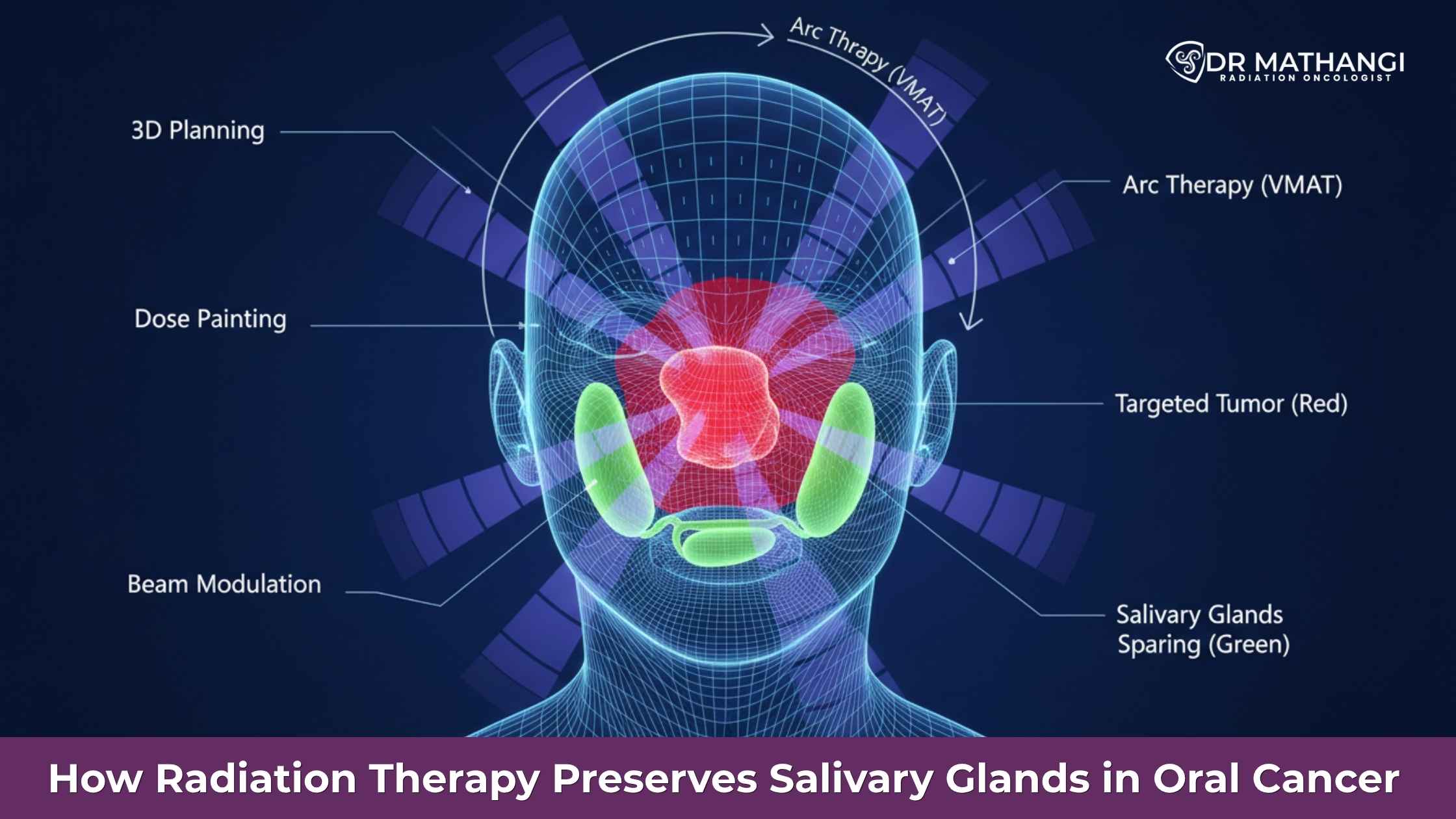
How Radiation Therapy Preserves Salivary Glands in Oral Cancer

Radiation Therapy

Nearly 60–90% of oral cancer patients undergoing traditional radiation therapy experience dry mouth after radiation treatment, a condition medically known as xerostomia. However, modern advancements in radiation therapy salivary gland preservation have dramatically changed this reality, allowing patients to undergo effective cancer treatment while maintaining essential gland function.

Under the expertise of Dr Mathangi J, Senior Consultant & In-charge – Radiation Oncology, patients benefit from cutting-edge techniques designed not just to treat cancer, but to preserve their dignity, comfort, and quality of life radiation therapy outcomes.

What is radiation therapy salivary gland preservation in oral cancer?

Radiation therapy salivary gland preservation refers to advanced radiotherapy methods that specifically target cancer cells while minimizing radiation exposure to the salivary glands. This helps reduce complications like dryness, swallowing difficulties, and speech issues.

Traditional radiation often affected surrounding tissues indiscriminately. Today, precision-based technologies ensure:

  • Accurate tumor targeting
  • Reduced damage to healthy tissues
  • Better long-term recovery outcomes

This shift represents a major leap forward in salivary gland protection radiotherapy.

Why is xerostomia radiation therapy prevention important?

Xerostomia radiation therapy prevention is crucial because saliva plays a vital role in oral health, digestion, and infection control. Without adequate saliva, patients may face long-term complications.

Problems caused by untreated xerostomia include:

  • Difficulty in speaking and swallowing
  • Increased risk of oral infections
  • Tooth decay and gum disease
  • Loss of taste sensation

By prioritizing gland preservation, Dr Mathangi ensures that treatment goes beyond survival — it supports a patient’s overall well-being.

What are the key radiotherapy side effects oral cancer patients face?

Radiotherapy side effects oral cancer patients experience can vary depending on treatment intensity and technique. However, common effects include:

Side Effect Description
Dry mouth Reduced saliva production leading to discomfort
Mucositis Inflammation and sores in the mouth
Taste changes Altered or reduced sense of taste
Difficulty swallowing Due to tissue inflammation

Advanced gland sparing radiation therapy techniques significantly reduce these complications.

How do gland sparing radiation therapy techniques work?

Gland sparing radiation therapy techniques use sophisticated imaging and delivery systems to avoid unnecessary radiation exposure to the salivary glands.

Dr Mathangi employs globally recognized technologies such as:

  • IGRT (Image-Guided Radiation Therapy) – Real-time imaging ensures precise targeting
  • RapidArc Technology – Delivers radiation in a continuous arc for accuracy
  • SBRT (Stereotactic Body Radiotherapy) – High-dose precision treatment
  • DIBH Gated Radiotherapy – Synchronizes treatment with breathing

These methods ensure optimal salivary gland protection radiotherapy while effectively eliminating cancer cells.

How does modern radiation therapy improve quality of life radiation therapy outcomes?

Quality of life radiation therapy outcomes are now a central focus in oncology. Patients are no longer expected to endure severe side effects as a trade-off for survival.

With advanced care, patients benefit from:

  • Better hydration and oral comfort
  • Improved ability to eat and speak
  • Reduced dependency on supportive treatments
  • Faster return to normal life

This holistic approach is at the core of Dr Mathangi’s treatment philosophy.

Why choose Dr Mathangi for oral cancer radiation therapy?

Dr Mathangi J is a highly respected name in radiation oncology, with over 20 years of experience and more than 12,000 successfully treated patients. She leads the Radiation Oncology department at Gleneagles Cancer Institute, Bangalore.

Her expertise includes:

  • Head and neck cancers
  • Brain tumors
  • Lung cancers
  • Prostate and gynecological cancers

She has received advanced international training in:

  • SRS/SBRT (Germany)
  • IGRT/RapidArc (Denmark)
  • Intraoperative radiotherapy

She is also recognized for installing the Asia Pacific’s first TrueBeam STx Machine, a breakthrough in precision radiotherapy.

Choosing Dr Mathangi means choosing:

  • Global expertise with personalized care
  • Advanced technology-driven treatment
  • A patient-first approach focused on outcomes and comfort

Which cancers are treated with radiation therapy?

Radiation therapy is a key treatment modality for multiple cancers, including:

  1. Head and neck cancers
  2. Brain tumors
  3. Spine tumors
  4. Esophagus and rectal cancers
  5. Lung cancers
  6. Liver cancers
  7. Breast cancers
  8. Bladder cancers
  9. Prostate cancers
  10. Uterine cancers
  11. Cervical cancer
  12. Vulval cancers
  13. Anal canal cancers
  14. Penile cancers

This wide scope highlights the importance of expert-led radiation oncology care.

What happens if salivary glands are not preserved?

Without proper radiation therapy salivary gland preservation, patients may experience lifelong complications that affect daily living.

These include:

  • Chronic dry mouth after radiation treatment
  • Speech difficulties
  • Malnutrition due to swallowing issues
  • Reduced immunity in the oral cavity

This is why choosing the right specialist and technology is critical — delaying or opting for outdated methods can significantly impact recovery.

How to start treatment with Dr Mathangi?

If you or your loved one is facing oral cancer, early intervention with advanced techniques can make a life-changing difference.

To consult Dr Mathangi:

  • Visit: https://drmathangi.com/contact/
  • Submit your contact details
  • Her team will schedule your appointment promptly

Taking action today ensures access to the most advanced xerostomia radiation therapy prevention and treatment protocols available.

About Dr Mathangi

Dr Mathangi J is a Senior Radiation Oncologist and In-charge at Gleneagles Cancer Institute, Bangalore. With over two decades of experience, she specializes in advanced radiotherapy techniques that prioritize both cancer control and patient comfort. Her leadership in innovation and commitment to excellence make her one of the most trusted names in oncology.


Frequently Asked Questions

radiation therapy salivary gland preservation refers to advanced planning and delivery methods in cancer care that aim to protect healthy salivary tissues while targeting tumors. This is crucial because preserving gland function reduces complications like dry mouth after radiation treatment and supports better nutrition, speech, and oral hygiene during recovery.

Dr. Mathangi uses precision-driven approaches to ensure effective tumor control while safeguarding essential oral functions for long-term well-being.

xerostomia radiation therapy prevention involves minimizing radiation exposure to salivary glands using highly targeted techniques. By carefully mapping tumor boundaries and nearby structures, specialists can reduce unnecessary damage.

Dr. Mathangi incorporates patient-specific planning, hydration guidance, and supportive therapies to reduce the risk of persistent dryness and improve comfort throughout the treatment journey.

salivary gland protection radiotherapy includes advanced imaging, intensity-modulated radiation therapy (IMRT), and adaptive planning. These methods help shape radiation beams precisely around tumors while sparing nearby glands.

Dr. Mathangi focuses on balancing effective cancer control with preservation of vital tissues, ensuring patients experience fewer long-term complications.

dry mouth after radiation treatment can vary from temporary to long-term depending on the extent of gland exposure. With modern techniques, many patients experience partial or full recovery over time.

Dr. Mathangi emphasizes early intervention, saliva substitutes, and dietary guidance to help manage symptoms effectively and improve patient comfort.

radiotherapy side effects oral cancer may include dryness, taste changes, mucosal irritation, and difficulty swallowing. However, modern techniques significantly reduce the severity of these effects.

Under Dr. Mathangi’s care, patients receive continuous monitoring and supportive therapies to minimize discomfort and maintain oral health during treatment.

gland sparing radiation therapy techniques include IMRT, image-guided radiation therapy (IGRT), and proton therapy, all designed to precisely deliver radiation while protecting surrounding tissues.

Dr. Mathangi carefully selects the most suitable technique for each patient, ensuring optimal tumor targeting while preserving salivary gland function.

quality of life radiation therapy outcomes improve significantly when salivary glands are preserved. Patients can eat, speak, and maintain oral hygiene more comfortably, reducing long-term complications.

Dr. Mathangi’s patient-centered approach ensures that treatment not only focuses on cancer control but also on maintaining dignity, comfort, and everyday functionality.

By using this website - You confirm to have read and agree to the Disclaimer statement, Privacy Policy and the Terms & Conditions of this website.
Chat
linkedin facebook pinterest youtube rss twitter instagram facebook-blank rss-blank linkedin-blank pinterest youtube twitter instagram