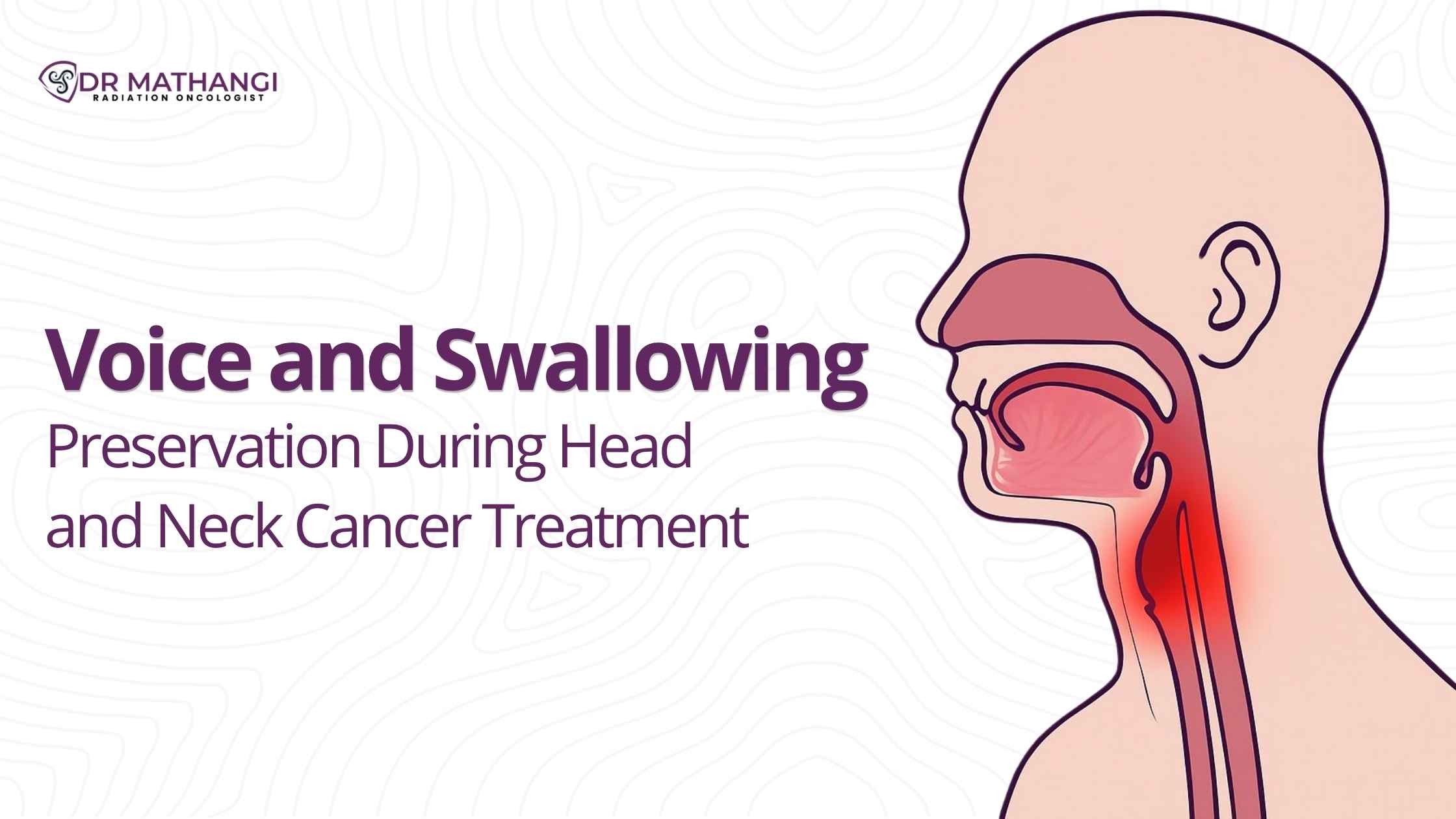
Voice and swallowing preservation during head and neck cancer treatment

voice and swallowing

Nearly 60–70% of patients undergoing treatment for head and neck cancers report difficulties with speech or swallowing at some stage of their journey. This makes voice swallowing preservation cancer treatment not just a medical priority but a life-defining necessity. The ability to speak clearly and swallow comfortably directly impacts confidence, nutrition, and social interaction—core aspects of human dignity.

Under the expertise of Dr Mathangi, Senior Consultant & In-charge - Radiation Oncology at Gleneagles Cancer Institute, patients benefit from advanced, precision-driven care that prioritizes both cancer control and functional preservation. With over 20 years of experience and more than 12,000 successfully treated patients, her approach integrates cutting-edge radiotherapy with compassionate rehabilitation planning.

What is voice and swallowing preservation in cancer care?

Voice and swallowing preservation refers to medical strategies that aim to treat cancer while maintaining the patient’s ability to speak and swallow effectively. This is achieved through highly targeted radiation techniques, multidisciplinary care, and early rehabilitation planning.

  • Protecting vocal cords and surrounding structures
  • Minimizing radiation exposure to swallowing muscles
  • Using advanced imaging to guide therapy
  • Integrating therapy during and after treatment

This is where speech preservation radiation therapy plays a transformative role, especially when delivered with precision technologies like IGRT, RapidArc, and SBRT.

Why is preserving speech and swallowing critical?

The loss of speech or swallowing ability can lead to:

  • Severe nutritional deficiencies
  • Social withdrawal and emotional distress
  • Increased dependence on feeding tubes
  • Reduced overall survival outcomes

By focusing on throat cancer therapy quality of life, Dr Mathangi ensures that treatment success is not just measured by tumor control but by how well patients return to normal life.

How advanced radiotherapy supports preservation

Modern radiotherapy techniques have revolutionized cancer care. Dr Mathangi’s expertise in advanced systems ensures precise targeting of tumors while sparing healthy tissues.

Key technologies used

  • Image-Guided Radiation Therapy (IGRT) for pinpoint accuracy
  • RapidArc technology for faster and more precise delivery
  • Stereotactic techniques (SRS/SBRT) for minimal tissue damage
  • DIBH gated radiotherapy for better organ protection
  • Interstitial brachytherapy for localized treatment

These innovations significantly improve functional outcomes radiotherapy, allowing patients to retain essential life functions.

What happens to swallowing function after cancer treatment?

Swallowing function after cancer treatment depends on multiple factors, including tumor location, treatment intensity, and rehabilitation efforts. While some patients may experience temporary difficulty, advanced techniques greatly reduce long-term complications.

Common challenges include:

  • Dry mouth (xerostomia)
  • Difficulty initiating swallowing
  • Reduced muscle coordination
  • Sensation changes in the throat

However, with early intervention and guided therapy, most patients regain significant function.

Role of rehabilitation in recovery

Rehabilitation after head neck cancer therapy is a crucial phase that begins during treatment itself. Dr Mathangi emphasizes proactive rehabilitation to ensure faster and more complete recovery.

Key rehabilitation strategies

  • Swallowing exercises to strengthen muscles
  • Dietary modifications for safe nutrition
  • Voice training techniques
  • Regular monitoring by specialists

Patients who undergo structured rehabilitation show markedly better outcomes in both speech and swallowing abilities.

How speech therapy enhances recovery

Speech therapy after cancer plays a vital role in restoring communication abilities. It focuses on improving voice clarity, strength, and coordination.

Benefits include:

  • Improved vocal strength and endurance
  • Better articulation and clarity
  • Reduced risk of aspiration
  • Enhanced confidence in social settings

With personalized therapy plans, patients often regain near-normal communication abilities.

Which cancers benefit from this approach?

Radiation therapy is essential in treating several cancers, including:

  1. Head and neck cancers
  2. Brain tumors
  3. Spine tumors
  4. Esophagus and rectal cancers
  5. Lung cancers
  6. Liver cancers
  7. Breast cancers
  8. Bladder cancers
  9. Prostate cancers
  10. Uterine cancers
  11. Cervical cancer
  12. Vulval cancers
  13. Anal canal cancers
  14. Penile cancers

Among these, head and neck cancers demand the highest level of functional preservation expertise.

What makes Dr Mathangi’s approach different?

Dr Mathangi combines clinical excellence with a patient-first philosophy. Her international training and leadership in advanced radiotherapy techniques set her apart.

  • Over 20 years of experience in radiation oncology
  • Training in Germany and Denmark
  • Installation of Asia Pacific’s first TrueBeam STx Machine
  • Director of Fellowship in Advanced Radiotherapy techniques
  • Specialization in complex head and neck cancers

Her approach ensures that patients are not just treated—but restored to a fulfilling life.

How to ensure the best outcomes during treatment

Patients can actively contribute to better outcomes by:

  • Starting therapy early
  • Following rehabilitation protocols diligently
  • Maintaining proper nutrition
  • Attending regular follow-ups
  • Communicating any changes in speech or swallowing

This proactive approach enhances functional outcomes radiotherapy and speeds up recovery.

About Dr Mathangi

Dr Mathangi J is a Senior Radiation Oncologist and In-charge of Gleneagles Cancer Institute, Bangalore. She specializes in advanced radiotherapy techniques and has successfully treated over 12,000 patients. Her expertise spans head and neck cancers, prostate cancers, brain tumors, lung cancers, and women’s cancers.

She is known for integrating cutting-edge technology with compassionate care, ensuring optimal outcomes for every patient.

Take the next step towards recovery

Delaying treatment or choosing less advanced care can compromise both survival and quality of life. With Dr Mathangi’s expertise, patients receive world-class treatment focused on preservation and recovery.

To book an appointment, submit your details at: https://drmathangi.com/contact/

Frequently Asked Questions

voice swallowing preservation cancer treatment focuses on maintaining a patient’s ability to speak clearly and swallow safely during and after cancer therapy. Dr. Mathangi integrates advanced clinical strategies such as targeted therapy planning, protective exercises, and early intervention techniques to minimize damage to critical structures. This approach helps ensure patients can continue daily functions with minimal disruption.

speech preservation radiation therapy is designed to deliver effective cancer treatment while protecting the vocal cords and surrounding tissues. Dr. Mathangi works closely with oncology teams to customize treatment plans that reduce exposure to areas essential for speech, helping patients retain clarity and strength in their voice throughout treatment.

swallowing function after cancer treatment can vary depending on the type and stage of cancer, as well as the treatment method used. With Dr. Mathangi’s proactive care model, patients receive guidance and exercises before, during, and after therapy to maintain muscle strength and coordination. This significantly improves recovery outcomes and reduces long-term complications.

throat cancer therapy quality of life is a central focus in Dr. Mathangi’s treatment philosophy. By combining medical care with functional rehabilitation, patients are supported in maintaining communication, nutrition, and social interaction. This holistic approach ensures that recovery is not just about survival, but also about living comfortably and confidently.

rehabilitation after head neck cancer therapy is essential to restore normal function and prevent long-term complications. Dr. Mathangi provides structured rehabilitation programs that include swallowing therapy, voice exercises, and nutritional support. These programs are tailored to each patient’s condition and recovery goals.

functional outcomes radiotherapy depend on multiple factors, including treatment precision and early supportive care. Under Dr. Mathangi’s care, patients often experience improved preservation of speech and swallowing abilities due to proactive monitoring and timely interventions throughout the treatment journey.

speech therapy after cancer should ideally begin as early as possible, often even before treatment starts. Dr. Mathangi emphasizes early assessment and intervention to build strength and resilience in the vocal and swallowing systems, which helps patients recover faster and more effectively post-treatment.

Dr. Mathangi adopts a patient-centric approach, combining advanced diagnostics, individualized therapy plans, and continuous monitoring. Each patient receives a tailored strategy that addresses their specific cancer type, treatment plan, and functional needs, ensuring optimal outcomes in both recovery and daily quality of life.

By using this website - You confirm to have read and agree to the Disclaimer statement, Privacy Policy and the Terms & Conditions of this website.
Chat
linkedin facebook pinterest youtube rss twitter instagram facebook-blank rss-blank linkedin-blank pinterest youtube twitter instagram